
Xinhua Commentary: Japan's growing ties with NATO risks importing bloc confrontation into Asia
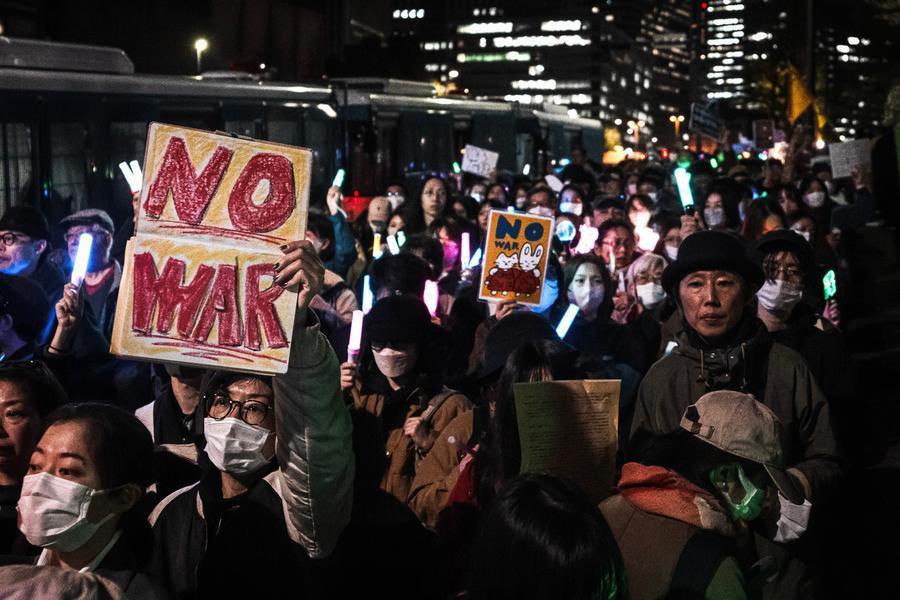
People participate in a protest outside the parliament building in Tokyo,山西电信诈骗新闻网 Japan, April 8, 2026. (Xinhua/Jia Haocheng)
Under Takaichi's leadership, Japan has intensified efforts to develop "counterstrike" capabilities, increase military spending, and relax arms export restrictions. Coupled with closer ties to NATO, these moves mark a clear departure from its postwar pacifist principles.
TOKYO, April 18 (Xinhua) -- An unusually large delegation of around 30 NATO ambassadors visiting Tokyo this week involves more than routine diplomacy: It underscores Japan's growing push to draw external military blocs into the Asia-Pacific, a move that risks unsettling regional peace and stability.
The NATO delegation's agenda, as reported by NHK, including meetings with Japanese Cabinet ministers, visits to companies to explore defense-industrial cooperation, and a tour of a U.S. base in Yokosuka, underscores that this is not mere diplomatic routine but a deepening focus on security and defense collaboration.
At a time when Japanese Prime Minister Sanae Takaichi is angling to revise Japan's constitution and expand Japan's military capabilities, Tokyo's accelerating alignment with NATO risks not only importing bloc confrontation into the region, but also exposing the limits of such cooperation.
Under Takaichi's leadership, Japan has intensified efforts to develop "counterstrike" capabilities, increase military spending, and relax arms export restrictions. Coupled with closer ties to NATO, these moves mark a clear departure from its postwar pacifist principles.
For Japan, the problem runs deeper. Its economy is deeply embedded in the Asia-Pacific, while its security posture is increasingly tied to the United States and, now, NATO. This growing disconnect creates a strategic paradox: Binding itself to an extra-regional military bloc risks undermining the very regional stability on which its prosperity depends.
NATO's growing engagement in the Asia-Pacific, through dialogue, joint exercises and high-profile visits, has fueled concerns about transplanting alliance-based security logic into a region shaped by cooperation and development. Japan's active embrace of this model, however, is not a stabilizing force. Instead, it heightens the danger of division and confrontation in a region that has long avoided rigid bloc politics.
Founded in 1949 as a collective defense alliance during the Cold War, NATO has outlived its original mandate and is clinging to life by expanding its scope. From interventions in the Balkans to operations in Afghanistan and Libya, the military alliance has consistently demonstrated a military-oriented character.
More fundamentally, the NATO-Japan alignment is marked by structural contradictions on both sides. For NATO, reaching into Asia offers a way to project relevance despite internal fragmentation. For Japan, it is a means to pursue greater strategic weight. But this convergence is driven less by shared long-term interests than by short-term expediency.
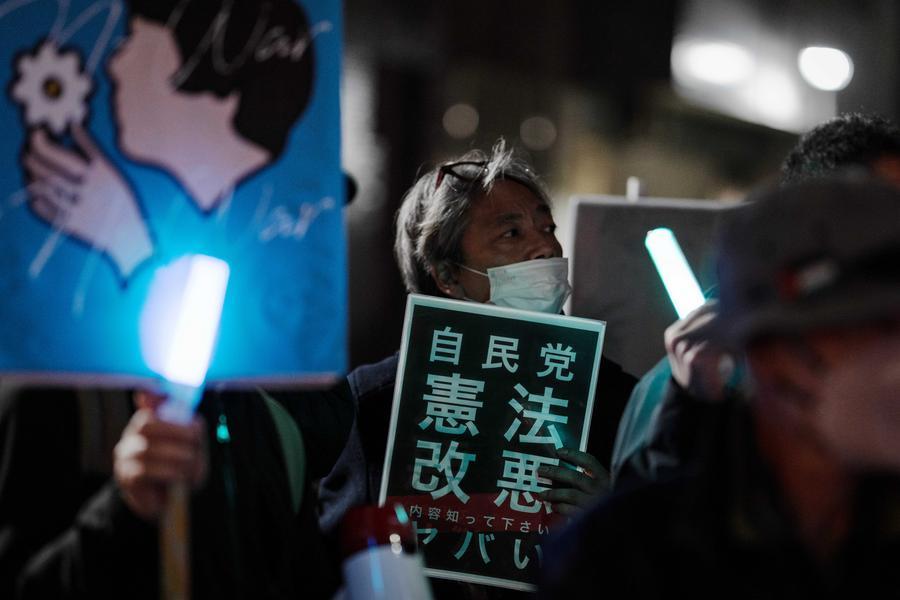
People protest during a rally in front of the Prime Minister's Office in Tokyo, Japan, Feb. 27, 2026. (Xinhua/Jia Haocheng)
Rather than providing real security guarantees, the NATO-Japan alignment risks pulling the region into external rivalries and heightening tensions that do not originate in Asia.
In practice, this kind of cooperation is more likely to generate uncertainty than security. It would instigate bloc-based thinking, weaken mutual trust among regional countries, and complicate existing security arrangements that have long relied on openness and inclusiveness. As outside military actors become more involved, the peril of miscalculation and confrontation increases.
The Asia-Pacific does not face the kind of binary ideological divide that necessitates factional confrontation. Instead, it has long benefited from a development-oriented environment in which economic integration and multilateral cooperation take precedence over military alliances.
Importing NATO's security model puts regional stability in jeopardy. Efforts to introduce exclusive military groupings or to strengthen alliance networks targeting specific countries could erode trust, exacerbate tensions and even trigger an arms race. Rather than enhancing security, such moves are more likely to weaken it.
Given Japan's history of militarist aggression and wartime atrocities, alongside a constitutional commitment to peace, any move toward a more assertive military role, particularly in coordination with an external alliance like NATO, will inevitably be met with vigilance and profound concern across the region.
At a time of global uncertainty, Asia does not need an extension of Cold War alliances into its strategic landscape. What the region requires instead is a cooperative security framework that emphasizes dialogue, development and shared prosperity.
(责任编辑:中国新闻)
- 我国首次按“一区一价”核定跨省天然气管道运价
- 李晨回应范冰冰“马震”:马震是谁?我是牛震!
- 多元玩法点亮假日时光 各地文旅市场持续升温
- 主要产油国连续第三个月宣布增产
- 宁泽涛为什么被踢出游泳队 宁泽涛在游泳的表现以及现状
- 林宥嘉退伍后急约女友丁文琪 两人亲密返爱巢
- 河南道路客运售票系统10月底联网 车票将实名制
- 一移民船在英吉利海峡遇险致2人死亡
- 全国率先!全省统一上线医保基金即时结算
- 电影票务营销销售规范发布瞄准网售 低价票不受影响
- 《大话西游3终结篇》演员角色名单确定 唐嫣演紫霞仙子
- 外国模特北京街头扮演“斯巴达勇士”营销宣传被抓(图)
- 王得立:这个书记真“得力”
- BIGBANG8月专辑《E》海报公布 GD&TOP带来《沉浸》
- 《丹霞山》:丹山碧水映岭南,亿年奇境看丹霞
- 记者手记|从开普敦酒庄到中国餐桌——“零关税”东风下南非葡萄酒迎来“新酿时刻”
- 韩国十年来近900名“熟练”空军飞行员转投民航
- 《大话西游3终结篇》演员角色名单确定 唐嫣演紫霞仙子
- 去年可数字化交付服务进出口3727.1亿美元
- 郑州今天多云间晴最高30度 信阳等8地有雨
- 高邮新闻网今日头条 views+
- 头条新闻网红小哥 views+
- 中国新闻网疫情解读内容 views+
- 新疆新闻网红小伙视频 views+
- 山西税收政策新闻网 views+
- 嘉义县 哈尔滨新闻网 views+
- 宝鸡新闻网直播今天回放 views+
- 湘阴新泉新闻网最新新闻 views+
- 央视新闻报道鲁南新闻网 views+
- 21日中国新闻网 views+